
Myopia management for children
When a child becomes short-sighted, spectacles correct the picture but change nothing underneath: the eye is growing too long. Myopia management works on that, and it is checked by measuring, not by promising.
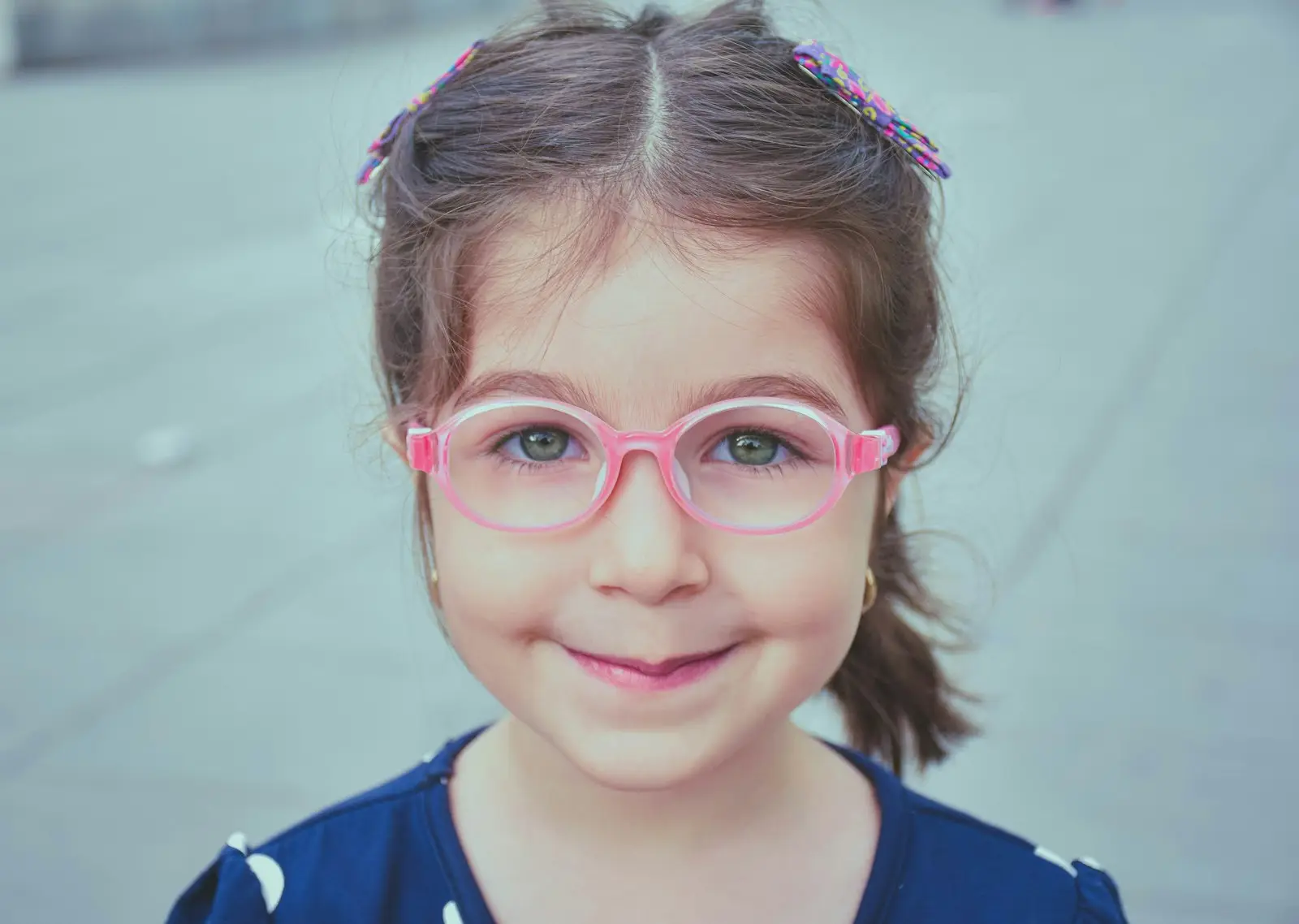
Short sight is not simply wearing glasses
A short-sighted eye is, almost always, an eye that has grown longer than it should have. The image forms before it reaches the back, which is why distance goes blurry. Spectacles move that image back where it belongs, but the eye carries on growing regardless.
That is what parents see every school year: the prescription climbs and the lenses need changing again. The glasses have not made anything worse. The eye has simply gone on with what it was doing.
High myopia in adulthood is then monitored for life by an ophthalmologist. That is the underlying reason the profession now tries to keep the eye growing as little as possible while there is still time.
What each check-up looks at
The first visit sets the baseline: the prescription in each eye and the measurements everything afterwards will be compared against. It is the dullest appointment of the lot and it is the one holding the rest up.
From the second visit there is something more useful than a single figure: a rate. What matters is not how much it has climbed but how fast, and whether that speed is the same as last year or shifting.
The options, and who decides on each
There is no best option for all children. There is one that suits this particular child: their prescription, the sport they play, what they will keep on their face, and the discipline that can realistically be kept up at home.
One option is not ours, and it is worth saying plainly: eye-drop treatment is prescribed and monitored by an ophthalmologist. If that is what your case calls for, we refer you with the report rather than offering you something else.
- Spectacle lenses designed for myopia management, worn like any other pair
- Soft contact lenses for daytime wear, with hygiene supervised at home to begin with
- Orthokeratology: a lens worn overnight, and the whole day with nothing on
- Drop treatment: prescribed and followed by an ophthalmologist, not by an optician
What is down to home, and costs nothing
The advice given today runs in two directions. One is daily time outdoors, the most repeated and the easiest to forget in winter. The other is distance and breaks: reading and writing with the page an elbow’s length away, and looking up now and then instead of stringing two hours of screen together.
None of this replaces the rest, and putting it that way is more use than overselling it. It is what can be done at home while the management runs, and it costs nothing.
What we will not tell you
We will not tell you that we are stopping your child’s myopia. Nobody can guarantee that, and anyone who promises it in writing is promising something they do not control.
What we do is measure, compare against the last check and show you the chart. If the rate changes, we carry on. If it does not, we tell you that too and the strategy is reconsidered. The decision is made with the figures in front of us and with you at the table.
Common questions
At what age should this start?
The earlier a rising prescription is spotted, the more room there is ahead. So the moment to start is not a particular age: it is the first time short sight appears, or the first time it is seen to be climbing.
My son is nine. Isn’t that young for contact lenses?
Age is not the criterion. Hygiene and responsibility are, and at that age plenty of children handle them better than some adults do. Parents supervise the cleaning and the case to begin with, and at each check we confirm the eye is coping.
I am short-sighted myself. Will she be?
There is a clear family component, and with two short-sighted parents the odds are higher. It is not a sentence, but it is a reason to have her eyes tested before she complains, because a child does not know they see badly: they assume everybody sees like that.
Can she carry on with sport?
Yes, and the sport feeds into the decision. With swimming or contact sport, an overnight lens or a pair of spectacles handles the day better than a daytime contact lens. Tell us at the first visit and it is taken into account.
The information on this site is for general guidance and does not replace a professional consultation. If you have symptoms, please see your optometrist, hearing aid audiologist or doctor.
